Four of Swords Tarot Card Meaning: Telling the difference between mental rest and avoidance
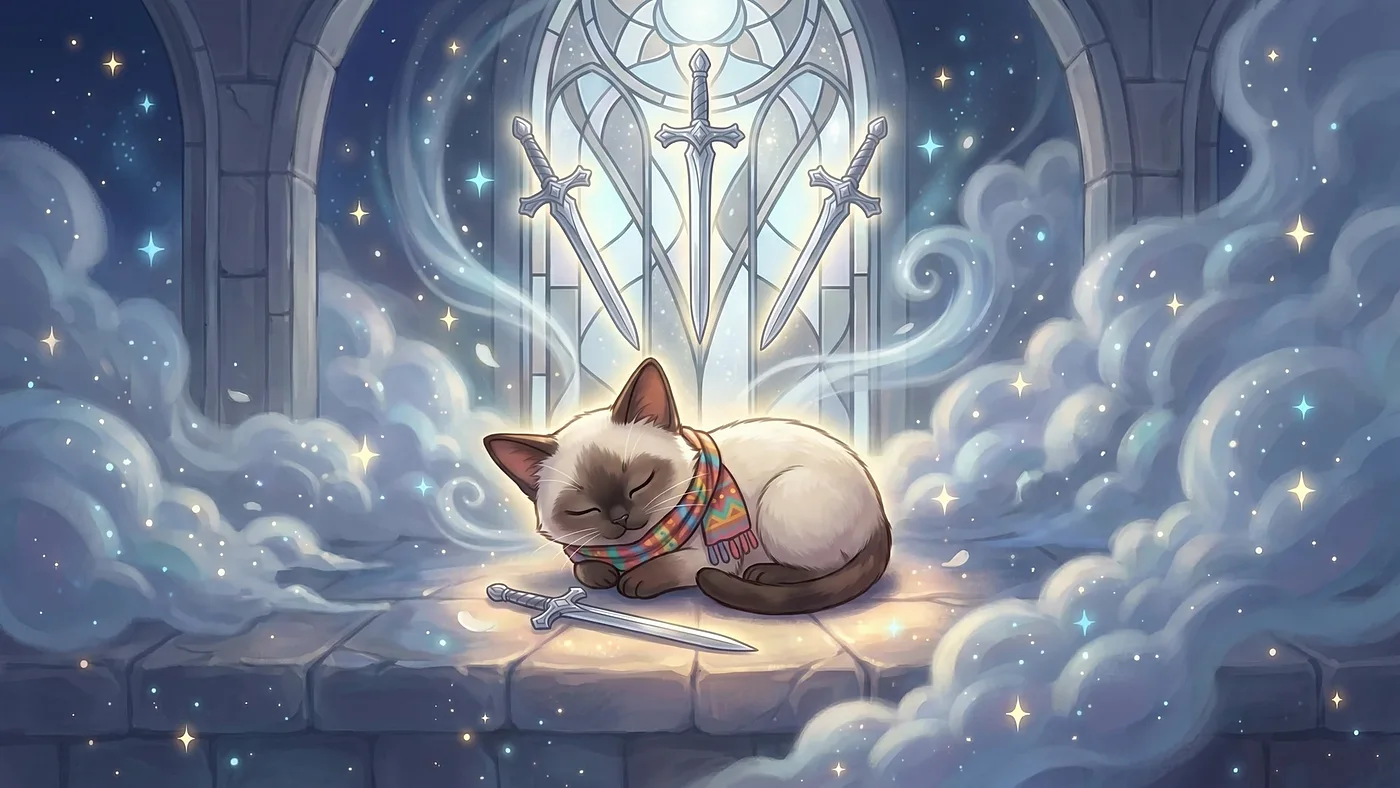
Read the Four of Swords for rest, silence, reversed avoidance, and when a pause helps words return with care.
SCHROE Editors
When the Four of Swords appears, it can be tempting to ask whether the card is good or bad. A better starting point is more practical: what is the card asking you to notice before the story becomes fixed? For the Four of Swords, the useful lens is telling the difference between mental rest and avoidance.
In love readings, this keeps one sentence from becoming a whole verdict about someone’s heart. In work or self-reflection, it asks you to check evidence, tone, timing, and the words that are actually available. You can check the card basics at Four of Swords card details; here, we will focus on how the meaning can be applied to a real situation without turning tarot into a fixed prediction.
Key Takeaways
- Upright Four of Swords points to rest, silence, distance that lets the mind settle.
- Reversed Four of Swords points to readiness to speak again, over-isolation, the end of a pause.
- Read the card as reflection and context, not as a fear-based warning or a final verdict.
What This Card Is Really Asking
Swords speak through words, thoughts, judgment, conflict, and pressure in the mind, so the Four of Swords becomes clearer when it is read through a concrete scene. Here, that scene is this: a delayed reply may be a needed breath, or it may be a way to dodge the conversation.
Four of Swords is less about disappearing and more about giving silence a job. Choose what the pause should protect, then decide when the next gentle check-in belongs.
Upright: rest, silence, distance that lets the mind settle
Upright Four of Swords brings telling the difference between mental rest and avoidance into focus, but it still needs evidence. In love, stay with repeated behavior and the standard behind the conversation. In work or daily life, check whether the wording, evidence, assumptions, and decision pressure support the choice you are about to make.
For example, if the situation looks like a delayed reply may be a needed breath, or it may be a way to dodge the conversation, upright Four of Swords would not prove what another person feels. It would ask you to slow the reading down and give the pause a purpose, then set a gentle time to check back. That keeps the advice small enough to use.
Reversed: readiness to speak again, over-isolation, the end of a pause
Reversed Four of Swords does not mean the situation is doomed. It often shows readiness to speak again, over-isolation, the end of a pause, especially when the same pattern has become hard to read clearly. Before blaming one person or forcing a final answer, separate confirmed behavior, delayed conditions, and expectations that may have grown too heavy.
For reversed Four of Swords, the useful question is narrower: what part of telling the difference between mental rest and avoidance is delayed, overdone, or missing support? Keep the answer to one adjustment you can actually make.
A Mini Reading Example
Imagine asking, “Would a pause help here?” If the Four of Swords appears upright, the center of the reading is telling the difference between mental rest and avoidance. The first move is not to force certainty, but to give the pause a purpose and set a gentle time to check back.
If Four of Swords is reversed in the same question, bring it back to telling the difference between mental rest and avoidance. Name the one assumption that most changes the reading, then decide whether the next step is a conversation, a pause, or a practical limit.
How It Differs From Nearby Cards
Four of Swords can look close to nearby cards, but here the useful test is telling the difference between mental rest and avoidance: compare whether the other card asks for a different action around the wording, evidence, assumptions, and decision pressure.
- Three of Swords: the previous step may set the scene, but Four of Swords focuses more specifically on telling the difference between mental rest and avoidance.
- Five of Swords: the next step may show escalation or aftermath, while Four of Swords asks you to clarify the present standard first.
- Four of Pentacles studies what is being held; Four of Swords studies why the mind needs quiet.
FAQ
Is upright Four of Swords always positive?
Not exactly. Upright makes the pattern easier to notice, but context still matters. Use it to name rest, silence, distance that lets the mind settle, then choose one action that fits the real situation.
Does Four of Swords mean no contact?
Sometimes it can describe quiet, but the point is whether the quiet is restoring clarity or avoiding it.
Try It In SCHROE
If Four of Swords still feels active in your situation, bring one specific question to a SCHROE tarot reading: “What should this pause protect?” That keeps the reading practical, personal, and easier to act on.
Try it yourself
Latest articles on this topic
- The World Tarot Card Meaning: Completing a cycle and crossing the next threshold
- Wheel of Fortune Tarot Card Meaning: What to choose when the flow changes
- Two of Wands Tarot Card Meaning: Planning, Vision, and the Choice Beyond the Door
- Two of Swords Tarot Card Meaning: Placing two standards side by side before forcing a choice